Showing posts with label Limited Income Housing. Show all posts

Monday, April 15, 2013

The More Things Change…

While cleaning out my desk for our move last week I found a copy of The Sun from June 9, 2002. Presumably I saved this particular paper because it featured an in-depth report on Columbia on the occasion of the towns 35th birthday.

As I reread the piece to decide whether it was worthy of continued retention, I chuckled when I came across the following paragraphs.

Lately, some loco activists have begun carping about the need to do more for low income housing in downtown Columbia, besides the Columbia Downtown Housing Corporation which was established as a part of the redevelopment legislation. The trust receives its funding to provide affordable housing from a fee assessed on every new housing unit created in downtown. It was seeded with a million dollar check from Howard Hughes.

Eleven years ago nothing like this existed or was proposed.

Is it enough?

Of course not. Providing low income housing in an area of relatively high housing values will always be a challenge, just as it was back in 1967.  Instead of demanding more subsidized housing in one place from one developer though, perhaps the better strategy would be to create a countywide housing trust that assesses a fee on all new residential units in HoCo.

Wednesday, April 03, 2013

“The Natives Are Massing”


The photo above came from Interested Party, a To2C netizen and regular commenter. The note accompanying the attachment was brief and succinct. “Spotted in a Columbia Village. What does it mean?”

At a minimum it means someone has thumbed their nose at their village architectural covenants. Yard art has long been considered bad form in Columbia.

Whether or not it means anything at all besides a spring prank, for some odd reason it made me think of the recent postings in the Howard County Citizens Association listserv. I regularly surf through their discussions, just to keep an eye on them. I don’t really consider the HCCA to be a political threat but HCCA members can usually be counted on to be against anything that involves a developer. Being in the development business I like to keep tabs on what they are up to.

Right now there is a big discussion going on about affordable housing and school board member Ann DeLacy is all over that topic like goose poop on a lakeside pathway. She thinks that subsidized housing should be more equally spread around the county citing a concern about “the lack of affordable housing in places like Maple Lawn, Dorsey Search and River Hill.”  

  “Are the elected officials here in Howard County simply not interested in the allocation of fair housing in all areas of the County? “

Sounds like ADL may be trying to broaden her political base on the left side of town. Naturally she links socio-economic diversity with education. It’s why our schools are so bad I suppose.

My favorite housing hypocrite is Alan Klein. You may recall that AK was kicked to the curb by his full spectrum housing colleagues when the deal was cut on the Downtown Columbia Housing Trust. Not matter what's negotiated, with AK it’s never enough. This from a guy who lives in one of the only Columbia neighborhoods that doesn't have any multifamily housing let alone anything that could even remotely be considered affordable. He likes affordable housing in your backyard, just not his.

You gotta keep an eye on these folks, especially when they are massing

Thursday, February 21, 2013

Now What?

When I first read this story about the HoCo Housing Commission backing off their previously announced plans for the Beechcrest Mobile Home Park in North Laurel, I thought it was in response to community opposition. After conducting my own inspection of the property today I now believe that it is much more than that.

My first reaction while driving through the community was “What were they thinking?”

This is a tough piece of ground with a couple of immediately obvious development obstacles, aside from relocating the current residents.
To begin with, access appears to be problematic. The community shares a narrow access road with an Econo Lodge hotel. I doubt that it meets current standards, much less what would be required if the property were redeveloped with more residential units. As I exited the property this afternoon another SUV entering pulled to the side to let me pass.  In order to fix this the county would likely need to acquire the property next door.

Assuming you could fix the access issue, the next hurdle is topography. The existing mobile homes occupy about half of the five and a half acre site that slopes up about ten feet from Route 1, levels off slightly for about two acres and then drops about 20 feet. In the development business we'd refer to this as challenging.

The commissions site plan shows a "bio-retention" storm water management area that looks to eliminate about half of the existing trees. I'm not sure how that works.

Then there are the existing mobile homes. Many of them look barely inhabitable and I'd be surprised if any of the units meet current minimum standards for county owned housing. Now they are the county housing authority’s responsibility so even if the property isn't redeveloped, the commission will likely have to do something to improve conditions for the current residents.

What a mess.

Tuesday, June 26, 2012

What He Said


Though some folks may look down their noses at loco bloggers as nothing more than nattering nabobs, at least one of us backs his words with a call for direct action.

For the third time in less than two years, Tom Coale, the author of HoCo Rising, has harnessed his blog energy to rally support for the HoCo loco homeless. Last year, thanks to a fundraising campaign he spearheaded on his blog, over $3,000 was raised for Grassroots enabling the loco charity to establish a sober house in the county.

Now he’s at it again. Yesterday Tom began a new campaign to raise $2,300 for Living in Recovery in order that they may open a second sober house.

I have often said that it is the readers who make loco blogging so rewarding and Tom’s efforts shown just how rewarding that can be. The loco blog readers have shown that they are not just interested in reading and commenting on loco stuff, they are also committed to fixing stuff. As he wrote in this post, the loco blog reader is “not satisfied to watch public need and chat about it with removed fascination.  We do things.” 

Indeed.

If you haven’t done so already, you can learn more and help make a difference here.

Wednesday, March 02, 2011

Misguided on Main Street

The negative reaction of some to the news of a Subway sandwich shop landing on Main Street in Ellicott City is puzzling. According to this story by Larry Carson in The Sun, the news of Subways arrival was “very disturbing to some of the more protective independent local merchants, craftspeople and visitors who come to the old mill town for its quirky appeal. What's next, some wonder: Starbucks?McDonald's?”

And this is necessarily a bad thing?
  
Consider this, some of the most successful historic towns like Annapolis and Chestertown thrive on a combination of the familiar and the not so familiar. The very fact that a national chain is locating on Main Street validates the location for others both local and national, especially if Subway knocks the cover off the ball

But what about the other local deli’s you say, won’t a national chain hurt them?

Perhaps, but consider that a chain also brings some marketing muscle to attract more people. A good national operator like Subway will also make everyone else raise their game up a notch and, in the case of Ellicott City’s Main Street, that would not be bad thing. Quirky appeal can only get you so far. 

The whole integrity of the historic district argument doesn't hold much water either.

"That's not a direction we want to see Ellicott City go," said Shelly Wygant, a Historic District resident who is also president of the Howard County Historic Society.”

Which direction would she prefer, vacant storefronts?

Similarly confusing is the objection to the proposals for the redevelopment of the Hilltop Housing complex and the Roger Carter Recreation Center. According to another story by Larry in The Sun residents at a recent meeting about the project “complained about the estimated $15 million cost of a proposed larger recreation center, skeptically questioned traffic conditions, worried about school crowding and suggested that mixing low-income and full-price renters in the same complex might not work.”

I suspect the true objection is the fear that this will somehow lower their property values.

"We're more worried about our green stuff," said Tom Marshall, 48, who lives in the Chapelview development on a ridge just west of Hilltop. "I paid $500,000 for my $350,000 house," he said referring to the recession's effect on its value. "It's not going to get any better for us. This is going to impact us negatively." He criticized the recreation center, saying, "I moved out of Columbia. I don't want to be in Columbia north."

Seriously Tom?

It is more likely that his home value will be negatively influenced by maintaining the status quo. This is smart growth we’re talking about here, creating a more walkable community. More people living within walking distance of the stores and restaurants in the historic district is good for the health and welfare of the Main Street merchants. A successful historic district equates to healthy home values.

And if the project ends up looking anything like the housing project that the county is currently redeveloping in Columbia, it will be a significant improvement over the current conditions.

Even if it does looks to some like Columbia north.

Sunday, September 05, 2010

Harper House History

It wasn’t originally called Harper House. The original name was Abbott House but even an abbot would have found the place a bit austere. Though Larry Carson described it as “one of the earliest examples of Columbia developer James W. Rouse's vision to make the planned community a place where people of all incomes could live together,” it was actually a failed project from the git go.

The development of Harper House is as much a story of money in search of a project as a story of providing truly affordable housing in the new town of Columbia. The building was developed by a then newly formed joint venture of The Rouse Company and their first ever international real estate partner, Waites, at a time when real estate was cresting another big ol’ bubble. It would crash soon enough.

The venture, Rouse-Waites was supposed to be this groundbreaking housing collaboration that would create innovative affordable housing projects that could be replicated across of the land. Unfortunately for Abbott House, by this time Jim Rouse had already begun to focus his creative energies on the inner cities of Boston and Baltimore. They built a concrete dorm instead.

It was one of the few projects that the venture ever finished and when the crash hit and federal subsidies for housing projects dried up, the partnership was dissolved and the assets were sold off.

Thursday, January 07, 2010

The Density Deal Part One

An argument is being made that General Growth Properties would be granted an exceptional amount of residential density in their proposed redevelopment plans for Columbia Town Center. Some argue that this bonus should be paid for by providing a larger share of affordable housing than what is required under the county’s Moderate Income Housing Unit Program (MIHU) which ranges from 10% to 15% of a residential development.

The truth is that the density that GGP is requesting is actually lower than the density the county is promoting along the Route 1 corridor in the newly created Transit Oriented Development Districts (TOD) and Corridor Activity Center (CAC) Districts. Both of these districts allow for a density of 25 residential units per acre while the 5,500 proposed residential units for Columbia Town Center works out to only15.8 residential units per acre.

If the CAC and TOD districts are only being held to the 15% moderate housing allocation why do affordable housing advocates think that Town Center, with it’s lower density allowance, think GGP is getting some kind of bonus?

Tuesday, January 05, 2010

The Competitive Landscape

click to enlarge
I had lunch with Tim Sosinski yesterday to talk about his push for “full spectrum” housing in Columbia Town Center. Tim believes that the affordable housing component of General Growths Town Center redevelopment plans does not go far enough to address the real housing needs in Howard County. He would like to see the company do more.

I like Tim. He is smart and passionate about his cause. I also agree with him that the need exists to provide housing for all segments of our population. We just disagree on how to get there.

The redevelopment program for Columbia Town Center will face some formidable competition from other area mixed used developments that are not being asked to do what he’d like GGP to do. In my opinion, if the county forces GGP to increase the proportion of affordable housing in Town Center beyond what is proposed, it will put the project at a competitive disadvantage. This project does not exist in a vacuum.

What exactly does the competitive landscape look like?

Here’s a quick summary:

Aerotropolis at BWI Thurgood Marshall Airport: A 10 million square foot development that includes Merritt Properties, Heffner Weber, Liberty Property Trust and Archon that is underway in the Stony Run area west of the airport. It will include office, retail, hotels and multifamily housing.

Arundel Preserve: A 268 mixed used development by Somerset Construction that includes 2 million square feet of office space, 250,000 square feet of retail space, 47 single family homes, 390 townhomes and 738 apartments. It is located along the Baltimore Washington Parkway near Arundel Mills mall.

Buckingham: A 32 acre mixed use development by Merritt Properties at Route 100 and Telegraph Road.

Arundel Gateway: A 300 acre mixed use development by Ribera Development and Greenberg Gibbons Commercial on Route 198 just outside Fort Meade.

Odenton Town Center: A 1,600 acre mixed used development on the east side of Fort Meade that includes office development by Capital CREAG and residential development by the Halle Companies and Stonebridge Carras.

Konterra Town Center: A 741 acre mixed use development in Laurel by Konterra Realty. This project will include 1,500,000 square feet of retail, 3,800,000 square feet of office space, and 4,500 residential units.

Maple Lawn: A 600 acre mixed use development by Greenebaum & Rose at the intersection of Route 29 and Route 216. The project will include 1,300 homes and 1.8 million square feet of commercial space.

Tuesday, December 29, 2009

Enough Affordable Housing in Columbia

Don’t get me wrong, I can certainly appreciate the need for affordable housing in Howard County but it does seem that Columbia already bears a disproportionate burden of the counties low cost housing stock. According to David Yungmann and New City Alliance, “Columbia currently contains more than half the affordable housing in Howard County.”

Apparently that isn’t enough for some housing advocates. They want a redeveloped Columbia Town Center to accommodate even more low cost housing than the developer has already generously proposed. According to this article by Larry Carson in The Sun, “Advocates of affordable housing want 10 percent of the new residential units to be set aside for those with incomes under $40,000, with another 10 percent for those with incomes between $40,000 and $60,000.”

General Growth Properties is proposing “no more than 15 percent of the units be reduced-price housing, or about 825 of the 5,500 units. Hamm said his company would create a fund of up to $30 million to pay for that by charging builders a $4,000 premium per housing unit and by charging commercial tenants 5 cents per square foot.”

The company would initially establish the fund with a $5 million donation. That seems pretty generous to me.

Sunday, July 26, 2009

No Income Housing

According to this story by Larry Carson in The Sun today, five tenants of the Hilltop Housing in Ellicott report having no income.

The apartment complex, which is owned by the Howard County Housing Commission, charges rents “which require residents to pay no more than thirty percent of household income, are encouraging dependence in some residents.”

So what’s 30% of nothing?

Wednesday, July 22, 2009

Piling On

It’s almost as bad as congressional earmarks. Monday night, at the public hearing on CB 29, the usual suspects lined up to demand that any village center redevelopment include affordable housing if redevelopment plans include a residential component.

Under the banner of “full spectrum of housing” the housing activists want any new residential component to set aside 30% of the units for affordable housing. The 30% allocation would be broken down by 10% for families making between $60K and $80K annually, 10% for families making between $40K and $60K annually and 10% for families making less than $40K annually.

To be fair, these advocates recognize that some villages like Wilde Lake already have a disproportionate share of affordable housing. According to Tim Sosinski, the idea is to apply this 30% formula to those villages that have not done “their share” for affordable housing like River Hill. A developer like Kimco in Wilde Lake would be able to bypass the 30% allocation by making a contribution to a newly established “housing trust” instead.

While this is certainly a laudable effort to provide housing for those “police officers, firemen, teachers and waiters” who are currently priced out of this market, putting up additional hurdles for developers to jump through won’t help save the village centers.

I thought the whole idea of CB 29 was to actually make it easier to redevelop the ailing village centers.

Wednesday, July 08, 2009

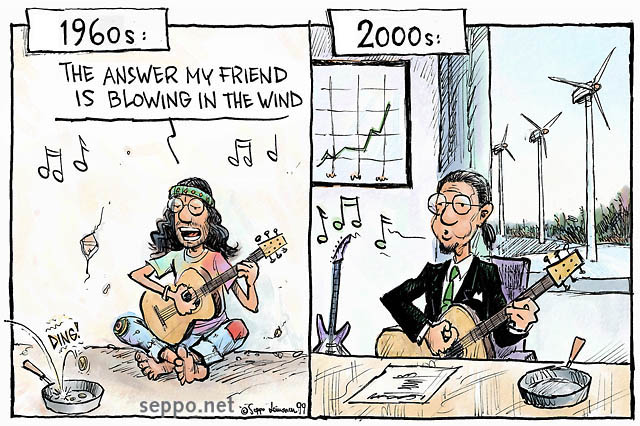
Blowing in the Wind


According to this story by Sarah Krouse in the Washington Business Journal, the new Ellicott Gardens apartment complex in Columbicott City will utilize a windmill to supplement the power requirements for the projects common areas.

"The windmill will contribute to the energy needed for the building's public areas including the corridors, lobby, parking garage, and gym. The windmill will generate about 400 kilowatt hours per month - to offer a little perspective, a compact fluorescent light bulb used all month would equal about 18 kilowatt hours."

While some developers contribute public art to their projects, Old Town Construction gave this project a gift that will keep on giving…as long as the wind blows anyway.

Monday, September 08, 2008

You Just Can’t Make Some Folks Happy

I guess it’s true that you just can’t make some people happy. I think Alan Klein falls into that category.

In this story by Larry Carson in yesterdays Sun, Greg Hamm, the General Manager of Columbia for General Growth Properties, unveiled a program that would dedicate a full 20 percent of the proposed 5,500 new residential units in Town Center to limited income families. Ten percent of those units would be set aside for families making less than $80,000 with the other ten percent going to families making less than $120,000. GGP is also proposing that approximately 200 rental units in the redeveloped Town Center “would be designed for shared use by students, hospital workers and retail and commercial workers.”

While many local affordable housing advocates praised the GGP plan, Alan Klein, spokesman for CoFoDoCo, was quoted as saying “The 20 percent…feels way too small.”

Alan further defined families making more $120,000 per year as “the wealthy few.”

What planet does he live on?

I wonder if any typical family in Columbia with a household income of $120,000 sees themselves as being wealthy.

I seriously doubt it.

I suppose Alan is just continuing to play the role of contrarian in the debate over the future of Columbia’s Town Center.

The 20 percent allocation seems pretty generous to me. More important it appears to be achievable thanks to GGP’s innovative funding mechanism. GGP is proposing to create a new non profit housing agency that would be funded by impact fees on new buildings in Town Center as well as surcharges on commercial and retail tenants in Town Center.

Twenty percent of the 5,500 new residential units equates to 1,100 new limited income housing units. This further equates to 220 units in each of the five new proposed Town Center neighborhoods (Symphony Overlook, Warfield, The Crescent, Merriweather, and The Lakefront).

I believe Alan Klein lives in the Hobbits Glen neighborhood in Columbia. How many limited income housing units are there in that neighborhood?

Tuesday, November 13, 2007

Columbicott City

click to enlarge
I missed this story in the Sun last week about the “limited income” apartments planned for Ellicott City.

I was wondering if “limited income” has become the new euphemism for affordable housing.

Anyway…

The 106 unit project being called The Residences at Ellicott Gardens is planned for a site at the intersection of Route 108 and Route 104. While this is technically Ellicott City, it still feels like Columbia because it is on the south side of Route 100. Then again maybe we should call this Waterloo Road Route 100 corridor area Columbicott City.

It is probably politically safe to put affordable housing in Columbicott City because it is sort of neither here nor there.

Also underway in Columbicott City is the Shipley’s Grant development, a 306 unit townhouse development that is about a quarter mile from the Ellicott Gardens project. Shipley’s Grant will be for people who are “limited” to purchasing a townhome in the $450,000 to $600,000 price range. That seems pretty pricey for a community that is bordered by high power transmission lines to the west, Route 100 to the north and Snowden River Parkway to the east.

They seem to selling well enough though.

Shipley’s Grant will also have a “village” retail center that will front Waterloo Road. So far Starbucks and Cold Stone Creamery have committed to leases in this new center on Main Street (Waterloo Road) in Columbicott City.

Wednesday, February 07, 2007

Snow Day Musings

I took a break from blogging after my last post on January 20th. I guess I had a case of bloggers writers block or perhaps I just had the blogging blahs.

You know, sometimes it all just seems so much like blah, blah, blah.

Anyway...in the interim I took a little trip down to an island in the West Indies and recharged my blogg strokes. Wordbones is back.

Since today was the first snow day for Howard County schools and I found myself being a stay at home dad with my eight year old daughter, I had a little spare time to get back to blahhing...err...blogging.

I stopped by Howard County's most prolific blogger, Hayduke, and was surprised to find a comment posted by Councilperson Courtney Watson. She was clarifying remarks attributed to her in a newspaper story about Brantley Developments proposal to build duplex housing in Elkridge. I leave the discussion of that particular topic to Hayduke but I was surprised to find one of our council people weighing in on a blog. Could it be that the bogging universe is expanding?

Are local blogs gaining credibility as legitimate forums for public debate?

I have always been curious as to the demographics of our local blogging scene. Up until now I suspected that it was largely composed of angry men (with apologies to numbersgirl!).

Could I be mistaken?

I also wanted to comment on a story I read in today's Sun about the proposed Centennial Gardens housing development. It now appears that this affordable housing project is officially dead in the water. The community opposition to this development was strong with the arguments being that it was "the wrong project on the wrong site" and "the lack of compatibility and the density of the project."

Okay.

So where is affordable housing compatible in Howard County?

Apparently anywhere but my back yard.